Contents
- 1.
- 2.
- 3.
Tax season is on the horizon, and while you may be lucky enough to get something back, sometimes, you’ll owe money.
If you know you’ll have to pay up this year, you can take the sting out of it by earning points. A hefty tax bill can be an opportunity to open a new credit card and charge your tax bill on it, though you will have to pay a small fee to do so. This can help you meet the spend threshold for a welcome bonus and earn you thousands of points or miles.
However, taxes can be confusing, and there are some things to consider if you want to pay your tax bill on your credit card. After all, is it really worth incurring extra fees to earn points? It can be, but only in certain circumstances.
We got some helpful advice from Jimmy Yoon, Loyalty Specialist at point.me, on how to pay your taxes with a credit card, if the rewards outweigh the extra fees, and why you might want to (or not want to) do so.
Can you put your taxes on a credit card?
You can definitely pay for your taxes on a credit card, but it “can incur a small fee,” according to Yoon. “For federal tax payments, the IRS has two approved payment processors, which charge between 1.75%-1.85% when paying by credit card. The amount depends on whether you’re paying local, county, state, or federal taxes.”

Start winning the credit card game
Find out which travel credit cards earn you more points without spending a dollar more.
When to put your taxes on a credit card (and when not to)
It’s possible to pay your tax bill on a credit card, especially if you’re willing to fork over a small additional percentage as a processing fee. But the real question looms: Should you put your taxes on a credit card?
And the answer depends.
Put your taxes on a credit card if:
You would have paid the full amount with your debit card or directly from your bank account
You’re ready to open a new credit card and can use the tax bill to hit a spend threshold
Your credit limit is high enough for the tax charge
You can handle paying an annual fee that comes with a new card
Don’t put your taxes on a credit card if:
You would’ve paid the tax bill with the credit card in installments
Are unable to get approved for a new card
Can’t manage another annual fee
Fees vs. welcome offer: How to come out on top
If you have to pay a tax bill and your situation matches the list above on when to put your taxes on a credit card, Yoon suggests opening a new credit card, so you can use the large payment to meet a spend minimum and earn a credit card welcome bonus.
“Since taxes are something you need to pay anyway, you might as well get something out of it. This is especially helpful with credit cards that offer a larger welcome bonus with a higher spend requirement, as you might otherwise not spend enough organically on your regular expenses,” he said. “Think of the fee as a small cost to purchase the welcome bonus, whether it’s transferable bank points, airline miles, hotel points, or even free night certificates.”
Yoon shares a helpful example of how you can still come out on top when using your credit card to pay taxes, even though you’ll pay a small fee.
Imagine a credit card is offering a 125,000-point welcome offer after reaching $8,000 in spend in the first three months. $8,000 is a large amount of money that the average consumer might struggle to spend in just three months, but if your federal tax bill is $10,000, you can charge it to your card, reach the spend threshold, and earn the welcome bonus right away.
If the fee to pay the bill is 1.75%, you’ll spend $175.00 in total for fees and get 125,000 points, plus an additional 10,000 points since you’ll earn 1x points per dollar spent on the bill. In total, you’d earn 135,175 points from your tax purchase.
You’ll Pay | You’ll Get |
$10,000 tax bill + $175 in fees (1.75% fee) | 10,175 points (1x point per dollar spent) |
Annual fee | Welcome bonus of 125,000 |
| Whatever additional perks + benefits the card offers |
Even if points are worth only 1 cent per point (and transferable points are often worth much more if you can move them to valuable hotel and airline partners), you’ll get at least a $1,300 value from your 135,175 points, if not significantly more.
Even when you add in the annual fee and the $175 IRS processing fee, you’re still coming out on top by a landslide.

Pick the right credit cards
Yoon offers some helpful recommendations for a new credit card to use for your taxes.
Opt for transferable points cards
“Always focus on transferable points first, such as American Express Membership Rewards points, Capital One miles, and Chase Ultimate Rewards points. These points offer flexibility when it comes time for using them on a trip, thanks to their transferability to partner travel programs,” he explained.
Opting for transferable rewards means that if an airline or hotel loyalty program devalues its currency, your points are still worth a lot, and many options remain for transferring them.
Search for high welcome offers
Yoon also encourages consumers not to forget the welcome offers.
“Which cards have the highest welcome bonuses? Are there any welcome bonuses where the spend requirement is too high, which you wouldn’t be able to fulfill organically any other time of the year?”
Because tax bills are often expensive, they’re an easy way to meet the spend threshold without stressing over every single charge at the grocery store or gas station.
However, you may have to spend more to earn more. Yoon points out that “premium cards typically have a higher annual fee and spending requirements, but also a higher welcome bonus. These are some of our favorites:
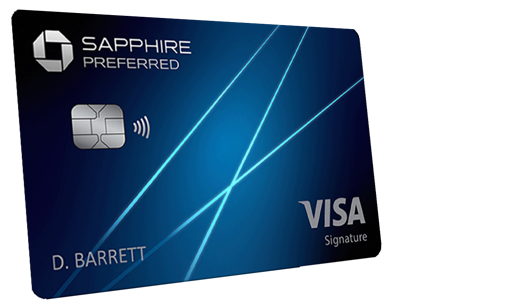
1. American Express Platinum Card2. Chase Sapphire Reserve Card3. Capital One Venture X Business Card 4. The Business American Express Platinum Card5. Sapphire Reserve for Business Card
Outside of transferable rewards cards, opt for co-branded cards associated with loyalty programs that you redeem the miles with the most.”
Pick cards with bonuses on everyday spend
You’ll want to consider how much points are worth, and how many points per dollar on everyday spend (including your tax bill) you’ll earn.
For example, if you put your $10,000 tax bill on the Capital One Venture X Rewards Credit Card, you’d get 2x miles/points per dollar spent, meaning you’d obtain the card’s welcome bonus, plus 20,350 points for your $10,175 in spend.
Don’t want to hit a welcome bonus? Consider aiming for these perks
If you’re not in the market for a welcome bonus or don’t want to add another credit card to the mix, you can use a large tax payment to hit other types of spend thresholds on cards you already hold that can get you benefits such as elite status, free night certificates, statement credits, and more.
For example, if you spend $75,000 annually on the Chase Sapphire Reserve, you’ll unlock perks such as IHG Diamond elite status, Southwest A-list status, a $500 Southwest credit, and a $250 The Shops at Chase credit. If you frequently fly Southwest or stay at IHG properties, this could easily outweigh the processing fee.
Other cards, such as the World of Hyatt credit card, offer an additional free night certificate after spending $15,000 in a calendar year. Meanwhile, the Atmos Rewards Summit Visa Infinite gives you a 100,000-point Global Companion Award after spending $60,000 in a card anniversary year.
Tips for paying your taxes on your credit card
Before committing to paying your taxes on your credit card, there are a few things you should know.
Only pay taxes on your credit card using authorized and approved payment processors
Yoon stresses the importance of using only approved payment processors obtained through official channels to avoid scams or paying higher fees.
“The IRS mentions which payment processors they accept payments from. For local, county, and state tax payments, use the payment processor that they use on their official website,” he said.
Interest rates on rewards cards are high
We’ve already stressed the importance of paying off your bill each month, but this is especially important on rewards credit cards, which tend to have higher APR. “If you incur interest on your tax bill, you’ll be paying a lot more for a welcome bonus, and it’s not worth it,” Yoon advised.
Business credit cards pay more fees
Yes, you can pay your taxes on a business credit card. Yoon breaks it down:
“You can, but the two IRS-approved payment processors charge a higher fee when using a business credit card versus a personal credit card (2.89-2.95% vs 1.75-1.85%),” he explained.
Use your credit card to pay taxes, but only when it makes sense
If you can pay off your credit card bill in full and have a big expense coming up — a tax payment, or even other significant expenses like engagement rings, tuition payments, weddings, a car, or home improvement purchases — it could be the perfect time to open a new credit card and use the large expense to meet the spend minimum and earn thousands of points via the welcome bonus.
“Just make sure you’re not getting charged more than a 3% transaction fee for any large purchase, and always use IRS-approved or official payment processors when paying your tax bill,” Yoon said.
If you’re looking for the right credit card for you, take our credit card quiz here.